🚀 Introduction: The Career Dilemma in 2026
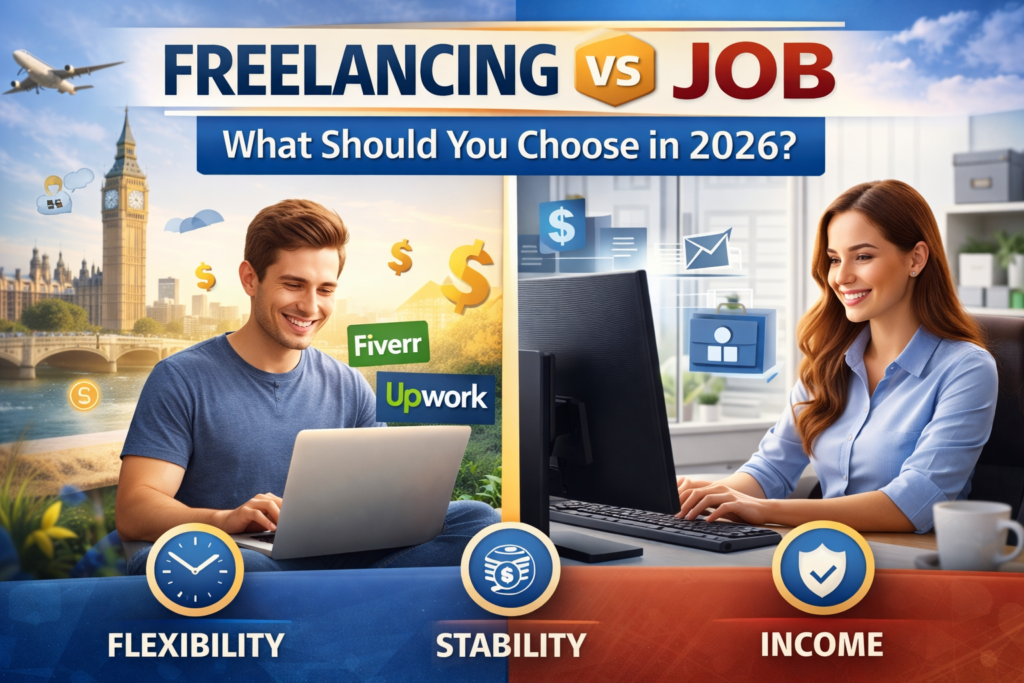
In today’s fast-changing world, one of the biggest questions people face is: Should you choose freelancing or a traditional job?
With the rise of remote work, AI tools, and then digital platforms. Freelancing has become more popular than ever. At the same time, jobs still offer stability and then structured growth.
So, which one is better in 2026?
In this guide, we’ll break down freelancing vs job in a simple and then practical way so you can also choose what fits your goals.
💻 What Is Freelancing?
Freelancing means working independently and then offering your services to clients worldwide. You are your own boss and then can also work from anywhere.
🔹 Key Features of Freelancing
- Work from home and anywhere
- Choose your clients
- Flexible working hours
- Unlimited income potential
Freelancers usually work on platforms like:
🏢 What Is a Traditional Job?
A traditional job involves working for a company with a fixed salary, schedule, and then responsibilities.
🔹 Key Features of a Job
- Stable monthly income
- Fixed working hours
- Career growth structure
- Employee benefits
Jobs provide security but often come with limited flexibility.
⚖️ Freelancing vs Job: Key Differences
💰 Income Potential
- Freelancing: Unlimited income can also depending on skill and then effort
- Job: Fixed salary with occasional increments
👉 Freelancing wins in long-term earning potential.
⏰ Flexibility
- Freelancing: Work anytime, anywhere
- Job: Fixed schedule (9–5 or more)
👉 Freelancing offers more freedom.
🔒 Stability
- Freelancing: Income can also fluctuate
- Job: Stable and then predictable income
👉 Jobs are more secure.
📈 Growth Opportunities
- Freelancing: Skill-based growth, fast scaling possible
- Job: Structured promotions, slower growth
👉 Freelancing can also grow faster if you are skilled.
😌 Work-Life Balance
- Freelancing: Depends on your discipline
- Job: Depends on company culture
👉 Both can also be good or bad depending on how you manage time.
🔥 Pros and then Cons of Freelancing
✅ Pros
- Freedom and then flexibility
- High income potential
- Work from anywhere
- Be your own boss
❌ Cons
- No guaranteed income
- Requires self-discipline
- No employee benefits
🔥 Pros and then Cons of a Job
✅ Pros
- Stable income
- Job security
- Structured career path
- Benefits (salary, bonuses, etc.)
❌ Cons
- Limited income growth
- Less freedom
- Fixed routine
🎯 Which One Should You Choose?
The answer depends on your personality and then goals.
👉 Choose freelancing if you:
- Want freedom and then flexibility
- Are willing to take risks
- Want unlimited earning potential
👉 Choose a job if you:
- Prefer stability
- Want a fixed income
- Like structured environments
💡 Best Strategy in 2026 (SMART MOVE)
The smartest approach today is:
👉 Start freelancing as a side hustle while doing a job
This way you:
- Reduce risk
- Build skills
- Create multiple income streams
Once your freelancing income grows, you can also switch full-time.
📈 Final Thoughts
In 2026, both freelancing and then jobs have their place. The best choice depends on your mindset, goals, and then risk tolerance.
If you want freedom, freelancing is the future.
If you want stability, a job is still a strong option.
👉 The real power comes from combining both.
❓ FAQs
Is freelancing better than a job?
Freelancing offers more freedom and then income potential, but jobs provide stability.
Can I do freelancing with a job?
Yes, many people start freelancing as a side hustle.
Which is best for beginners?
Start with a job for stability and then freelancing for extra income.